
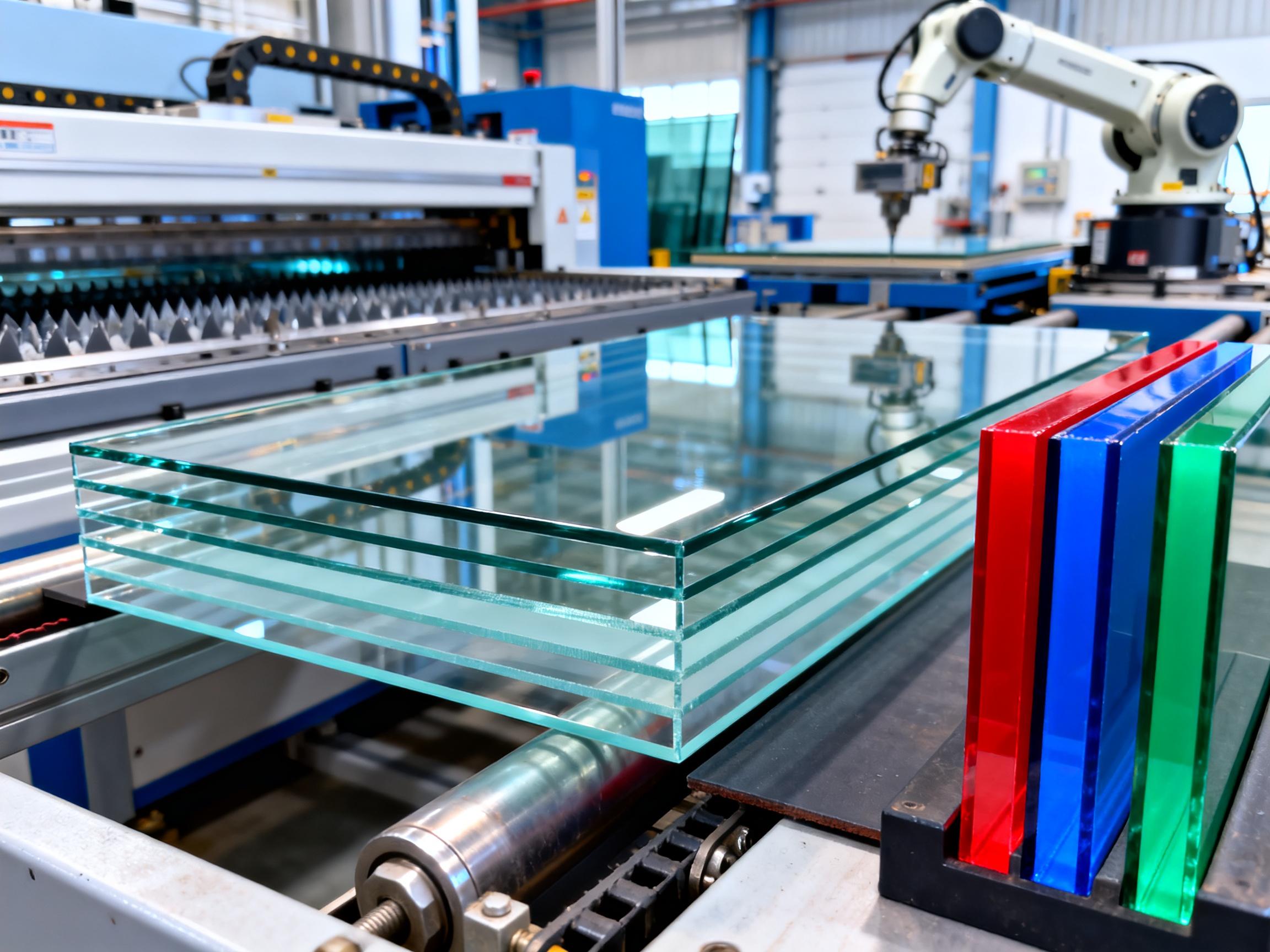
I. Definition and Composition of Laminated Glass
Laminated glass is a composite glass product consisting of one or more layers of organic polymer interlayer sandwiched between two or more sheets of glass. It is permanently bonded together through a special high-temperature pre-pressing (or vacuuming) and high-temperature, high-pressure process. This type of glass combines the strength and toughness of plastic with the hardness of glass, significantly increasing its shatter resistance.
II. Main Interlayer Materials for Laminated Glass
Common interlayer materials for laminated glass include PVB, SGP, and EVA.
PVB (Polyvinyl Butyral): Offers good safety, sound insulation, and UV resistance, but poor water resistance. Widely used in the construction, automotive, and transportation industries.
SGP (Ionicized Grain Interlayer): Insensitive to moisture, with good weather resistance and less prone to yellowing. Often used for large, unsupported sections of specialty glass, glass staircases, floors, and beams.
EVA (Ethylene-Vinyl Acetate Copolymer): Has good fluidity, suitable for creating decorative glass with diverse patterns, designs, and materials. Primarily used for interior partitions and decoration, EVA is generally not suitable for exterior curtain walls.
III. Characteristics of Laminated Glass
Safety: Even if the glass shatters, the fragments will adhere to the interlayer film, keeping the broken glass surface clean and smooth, effectively preventing cuts and falls, ensuring personal safety.
Earthquake Resistance: The interlayer film can withstand continuous attacks from weapons such as hammers and cleavers, and can also resist bullet penetration for a considerable period.
Sound Insulation, Energy Saving, and Environmental Protection: The sound insulation and sunlight control properties of the PVB interlayer film make it a new type of building material with energy-saving and environmentally friendly functions.
IV. Manufacturing Process of Laminated Glass
The manufacturing process of laminated glass includes twelve steps, such as cutting large sheets, slicing, edge grinding, washing and drying, powder spraying, bending, powder cleaning, and PVB film stretching. These steps ensure the quality and performance of the laminated glass.
V. Application Areas of Laminated Glass
Laminated glass is widely used in construction, automobiles, ships, and aircraft. Laminated glass is an ideal choice, especially in buildings at high risk of hurricanes or other natural disasters, windows of businesses or homes at high risk of break-ins, display cases for valuables (such as jewelry stores), aquariums or animal enclosures, glass floors, glass staircases, skylights, and glass roofs.
VI. Market Prospects for Laminated Glass
With the rapid development of domestic construction, automotive, and aviation industries, the demand for laminated glass is constantly increasing. Particularly in emerging industries such as new energy vehicles and green buildings, laminated glass has broad application prospects. In the future, with continuous technological advancements and market expansion, the laminated glass industry will usher in even broader development opportunities.
NAVIGATION
Send Us A Message
Please give us a message